Artifact Gallery
Explore additional views of this artifact.

Fingers
The Human Body as the First Computer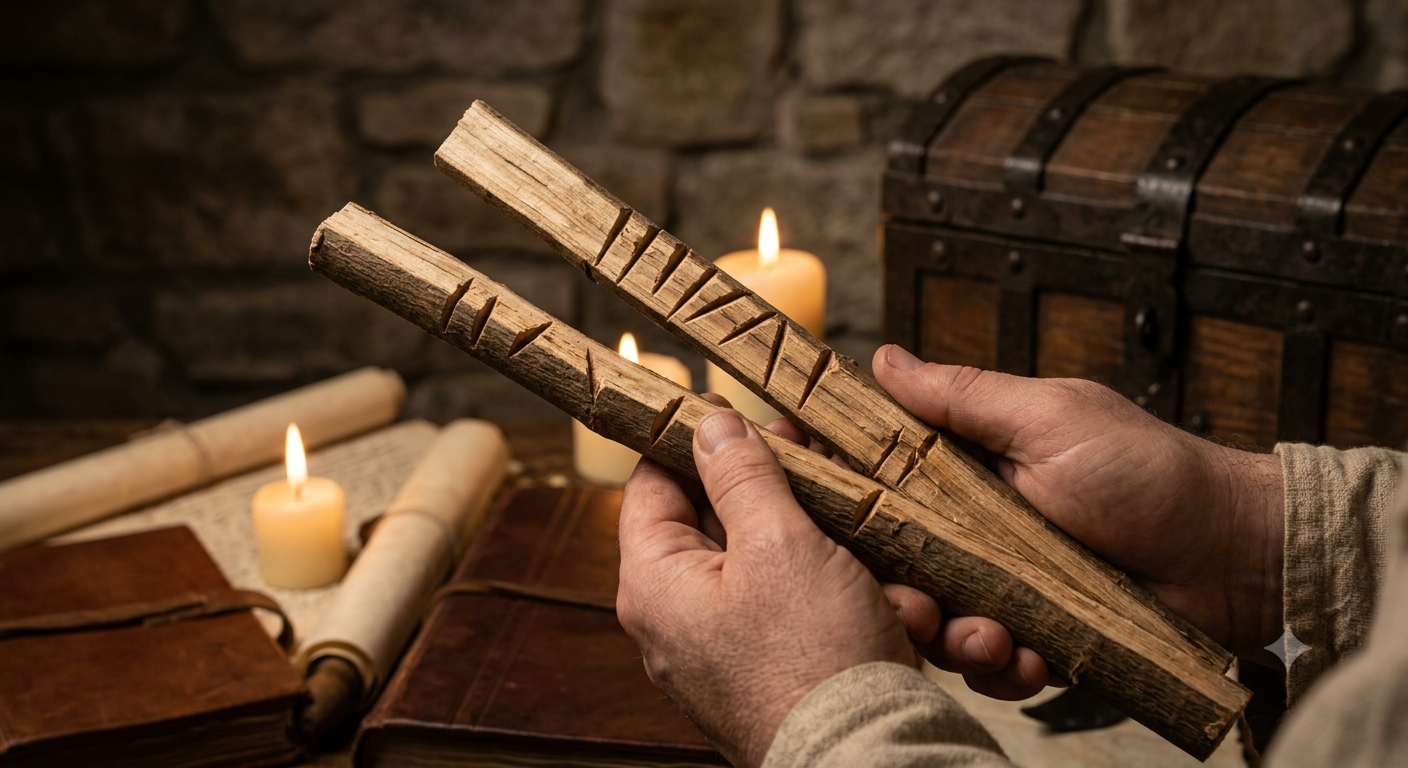
Tally Sticks
Permanent Memory & External Storage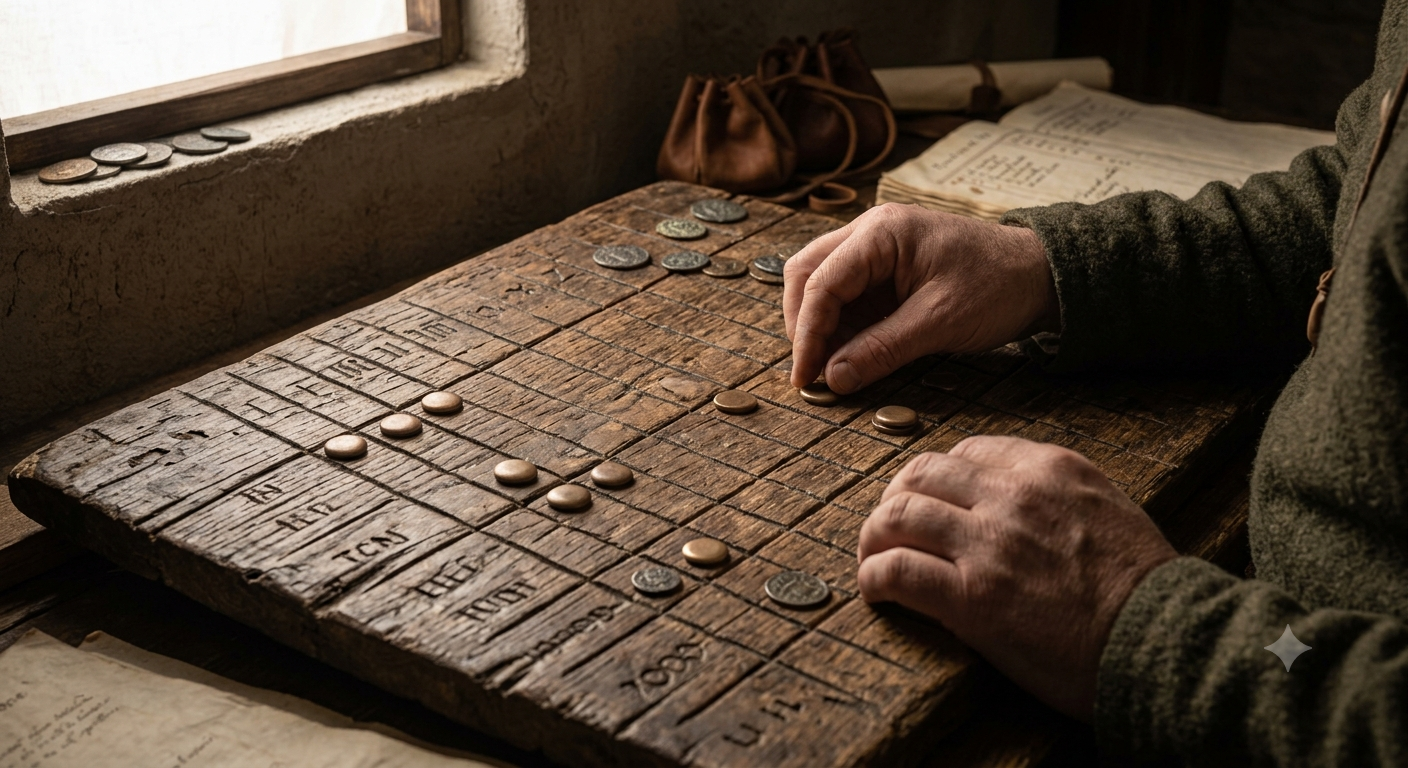
Counting board
Positional Value and Physical Calculation
Abacus
The Portable Speed-Calculator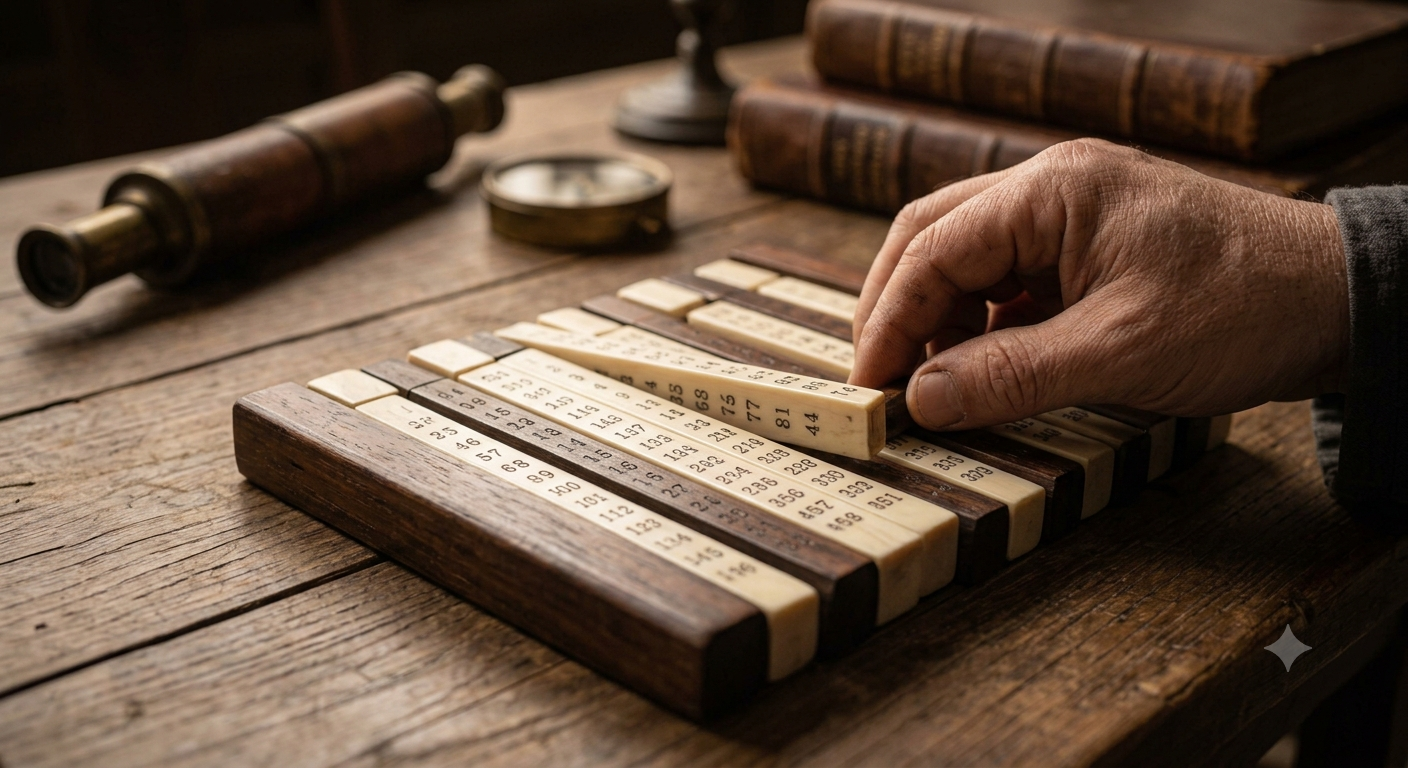
Napier Bone
Mechanical Multiplication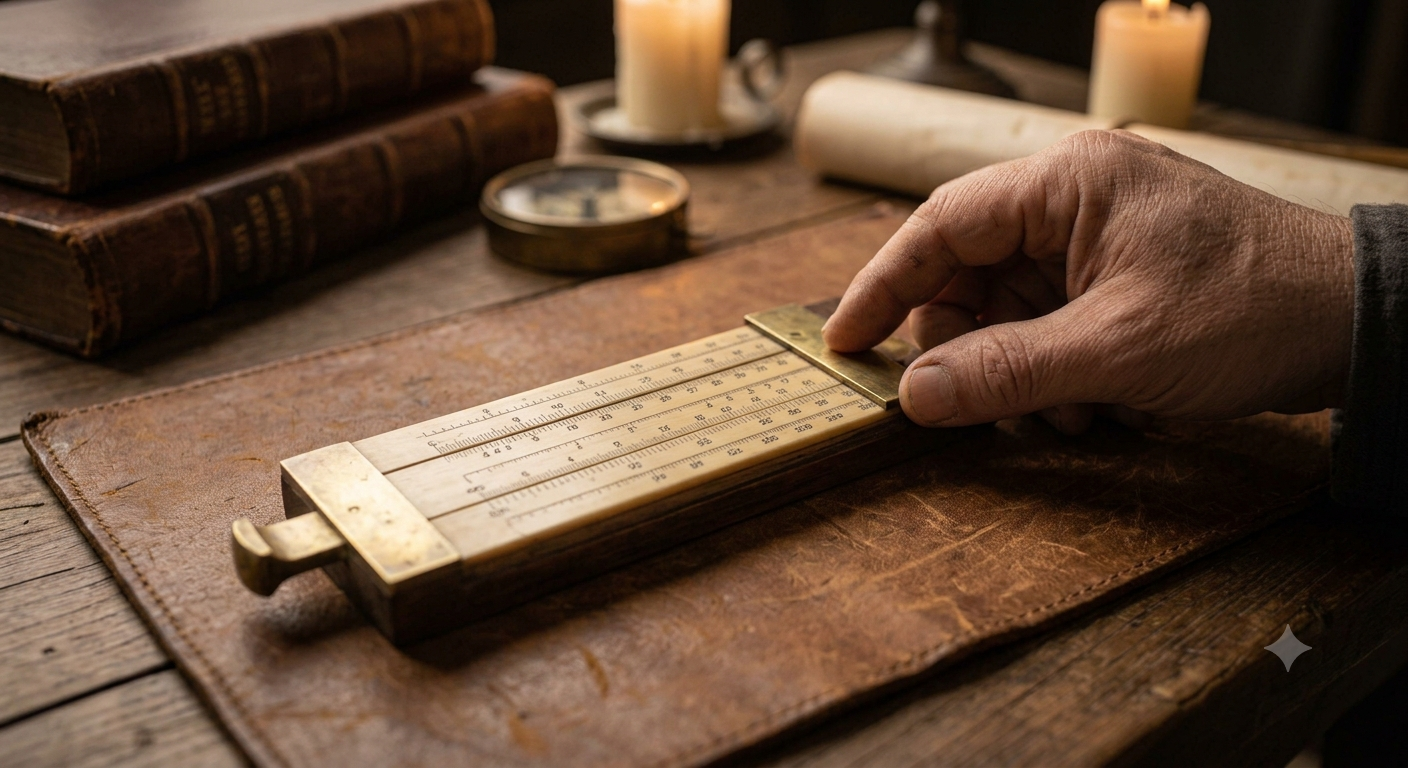
Slide rule
The World's First Mass Analog ComputerAbout this Artifact
Before computers existed, people needed ways to count, record numbers, and perform calculations. Over thousands of years, humans developed different tools to make counting easier and more accurate. These early devices laid the foundation for modern computers
Historical Significance
1. Counting Fingers Historical Significance The earliest and most natural method of counting used by humans. Counting with fingers helped people track quantities and laid the foundation for the number systems used today. Description Before mathematical tools were invented, people used their fingers and toes to count objects, animals, and goods. This simple method enabled early societies to perform basic calculations and manage everyday activities. 2. Tally Sticks Historical Significance One of the earliest methods of recording numerical information and keeping track of quantities, trade transactions, and important events. Description Tally sticks were pieces of wood, bone, or stone marked with carved lines or notches. Each mark represented a number, allowing people to maintain accurate records long before the invention of writing and paper. 3. Counting Boards Historical Significance An important early calculating aid that helped merchants, accountants, and scholars perform arithmetic operations efficiently. Description A counting board consisted of marked lines or spaces where counters were moved to represent numbers. By arranging and repositioning these counters, users could perform addition, subtraction, multiplication, and division. 4. Abacus Historical Significance The world's most successful manual calculating device and one of the earliest tools capable of performing complex arithmetic calculations. Description The abacus consists of beads that slide along rods or wires within a frame. By moving the beads into different positions, users can quickly perform addition, subtraction, multiplication, and division with remarkable accuracy. 5. Napier's Bones (1617) Historical Significance A groundbreaking invention that simplified multiplication, division, and the extraction of square roots, making complex calculations much faster. Description Invented by Scottish mathematician John Napier in 1617, Napier's Bones is a set of numbered rods used to perform mathematical calculations. The device reduced the time required for computations and influenced the development of later calculating machines. These early counting and calculating devices demonstrate humanity's continuous effort to simplify computation. They formed the foundation for mechanical calculators, electronic computers, and the digital technologies we use today.
Exhibit Information
| Category | Devices |
|---|---|
| Origin | Prehistoric Times |
| Culture | Early Hunter-Gatherer Societies |
| Historical Period | Prehistoric Times |
| Material | wood,bones, metals |
| Estimated Age | Over 2000 years old |
| Dimensions | - |
| Weight | - |
| Discovery Site | Europe |
Image Gallery
Explore additional photographs of this artifact.
Early Counting and Calculation Devices
The Human Body as the First Computer
Early Counting and Calculation Devices
Permanent Memory & External Storage
Early Counting and Calculation Devices
Positional Value and Physical Calculation
Early Counting and Calculation Devices
The Portable Speed-Calculator
Early Counting and Calculation Devices
Mechanical Multiplication
Early Counting and Calculation Devices
The World's First Mass Analog Computer
Early counting Devices
Before computers existed, people needed ways to count, record numbers, and perform calculations. Over thousands of years, humans developed different tools to make counting easier and more accurate. These early devices laid the foundation for modern computers
Audio Narrations
Listen to curator explanations and AI-powered museum narrations.
AI Museum Narration
Jenny
Welcome to HISTORIA Virtual Museum. Today you are viewing the artifact titled "Early Counting and Calculation Devices". This artifact belongs to the category of Devices. It originates from Prehistoric Times. It is associated with the Early Hunter-Gatherer Societies culture and dates back to the Prehistoric Times period. The artifact is made from wood,bones, metals. Before computers existed, people needed ways to count, record numbers, and perform calculations. Over thousands of years, humans developed different tools to make counting easier and more accurate. These early devices laid the foundation for modern computers This artifact is historically significant because 1. Counting Fingers Historical Significance The earliest and most natural method of counting used by humans. Counting with fingers helped people track quantities and laid the foundation for the number systems used today. Description Before mathematical tools were invented, people used their fingers and toes to count objects, animals, and goods. This simple method enabled early societies to perform basic calculations and manage everyday activities. 2. Tally Sticks Historical Significance One of the earliest methods of recording numerical information and keeping track of quantities, trade transactions, and important events. Description Tally sticks were pieces of wood, bone, or stone marked with carved lines or notches. Each mark represented a number, allowing people to maintain accurate records long before the invention of writing and paper. 3. Counting Boards Historical Significance An important early calculating aid that helped merchants, accountants, and scholars perform arithmetic operations efficiently. Description A counting board consisted of marked lines or spaces where counters were moved to represent numbers. By arranging and repositioning these counters, users could perform addition, subtraction, multiplication, and division. 4. Abacus Historical Significance The world's most successful manual calculating device and one of the earliest tools capable of performing complex arithmetic calculations. Description The abacus consists of beads that slide along rods or wires within a frame. By moving the beads into different positions, users can quickly perform addition, subtraction, multiplication, and division with remarkable accuracy. 5. Napier's Bones (1617) Historical Significance A groundbreaking invention that simplified multiplication, division, and the extraction of square roots, making complex calculations much faster. Description Invented by Scottish mathematician John Napier in 1617, Napier's Bones is a set of numbered rods used to perform mathematical calculations. The device reduced the time required for computations and influenced the development of later calculating machines. These early counting and calculating devices demonstrate humanity's continuous effort to simplify computation. They formed the foundation for mechanical calculators, electronic computers, and the digital technologies we use today. Thank you for visiting HISTORIA Virtual Museum. We hope you enjoy exploring the rest of our collections.
AI Museum Experience
Explore an AI-enhanced interpretation of this artifact.
Historical Information
Discover the historical background and characteristics of this artifact.
Category
Devices
Historical Period
Prehistoric Times
Origin
Prehistoric Times
Culture
Early Hunter-Gatherer Societies
Material
wood,bones, metals
Estimated Age
Over 2000 years old
Discovery Location
Europe
Current Condition
Good
Historical Significance
1. Counting Fingers Historical Significance The earliest and most natural method of counting used by humans. Counting with fingers helped people track quantities and laid the foundation for the number systems used today. Description Before mathematical tools were invented, people used their fingers and toes to count objects, animals, and goods. This simple method enabled early societies to perform basic calculations and manage everyday activities. 2. Tally Sticks Historical Significance One of the earliest methods of recording numerical information and keeping track of quantities, trade transactions, and important events. Description Tally sticks were pieces of wood, bone, or stone marked with carved lines or notches. Each mark represented a number, allowing people to maintain accurate records long before the invention of writing and paper. 3. Counting Boards Historical Significance An important early calculating aid that helped merchants, accountants, and scholars perform arithmetic operations efficiently. Description A counting board consisted of marked lines or spaces where counters were moved to represent numbers. By arranging and repositioning these counters, users could perform addition, subtraction, multiplication, and division. 4. Abacus Historical Significance The world's most successful manual calculating device and one of the earliest tools capable of performing complex arithmetic calculations. Description The abacus consists of beads that slide along rods or wires within a frame. By moving the beads into different positions, users can quickly perform addition, subtraction, multiplication, and division with remarkable accuracy. 5. Napier's Bones (1617) Historical Significance A groundbreaking invention that simplified multiplication, division, and the extraction of square roots, making complex calculations much faster. Description Invented by Scottish mathematician John Napier in 1617, Napier's Bones is a set of numbered rods used to perform mathematical calculations. The device reduced the time required for computations and influenced the development of later calculating machines. These early counting and calculating devices demonstrate humanity's continuous effort to simplify computation. They formed the foundation for mechanical calculators, electronic computers, and the digital technologies we use today.
Related Artifacts
Explore more artifacts from this collection.
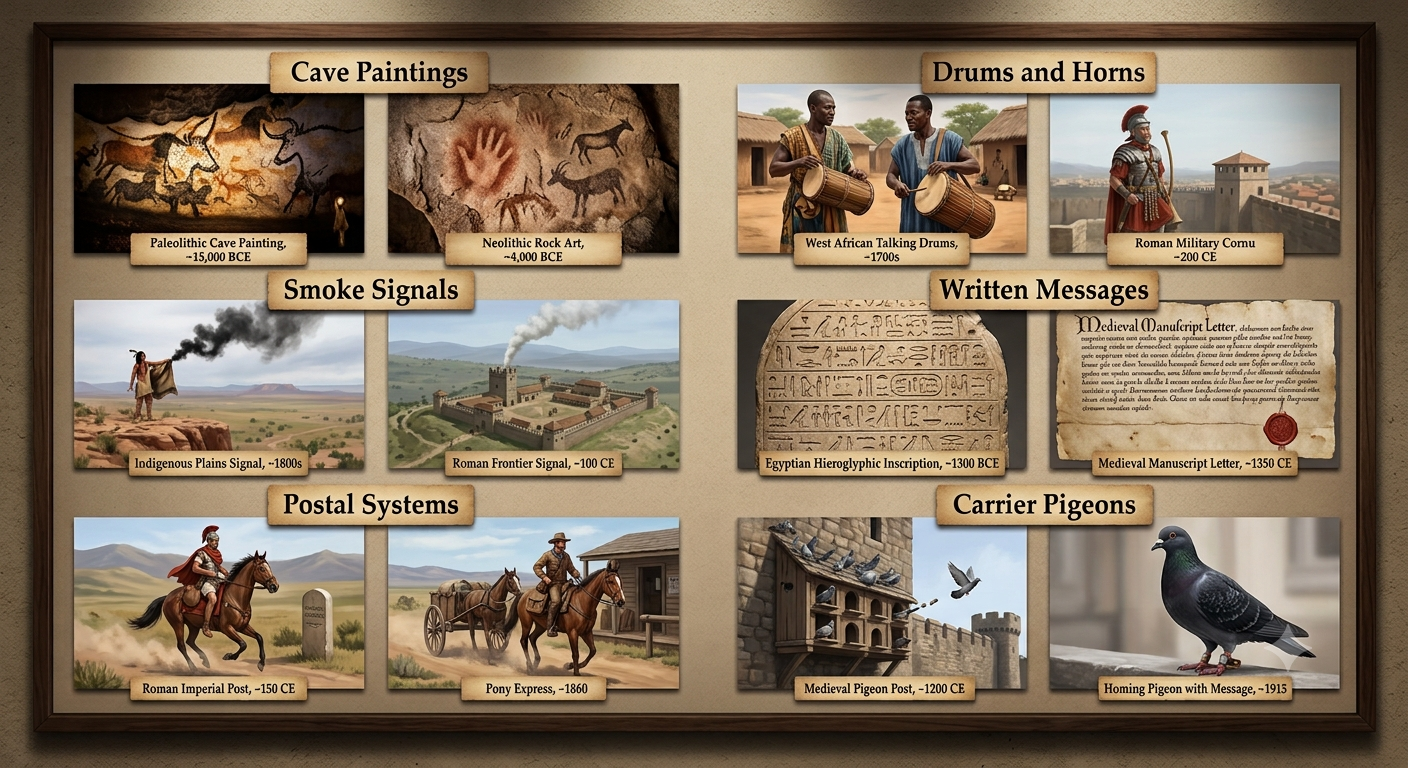
Early Methods of Communication
Ancient Civilizations
Prehistoric Era,Ancient Civilizations
View Artifact